
Efficiency is a relative thing
On person's efficiency likely means more work for someone else.

Efficiency is a double-edged words. It sounds good because who doesn’t want to be more efficient. But often there are hidden agendas swathed in efficiency that actually are neither efficient nor helpful.
I’m not sure if you know this but there is a program where you get certified in efficiency. The first time I heard a colleague refer to someone as a Lean Six Sigma Black Belt, I thought he was having a stroke.
Here’s what Google says about the Six Sigma program.
Six Sigma certification is a professional credential verifying knowledge of data-driven methods to reduce process defects, variation, and waste. It uses DMAIC (Define, Measure, Analyze, Improve, Control) tools to improve quality and efficiency across industries like manufacturing, healthcare, and finance. Certification is structured by “belt” levels—White, Yellow, Green, Black, and Master Black Belt—indicating increasing expertise in statistical analysis and project leadership. [There is an add on that is] often combined as “Lean Six Sigma,” which merges waste reduction (Lean) with defect reduction (Six Sigma).
Clearly, I don’t know anything about this program though I imagine they teach you to chop out waste, kick down barriers to efficiency, and block opposition to improvement. This also reminded me of my own approach to dealing with problems (or assessment) that I told you about before. In my approach the practitioner Formulates the question that needs to be addressed, Understands the problems associated with that question, builds Consensus among the team on how to address the problems, and the final phase is Knowledge Utilization to solve the problem. I called this the FUCKU approach. It works here too. I am a Lean Mu Kappa Black Belt in FUCKU.
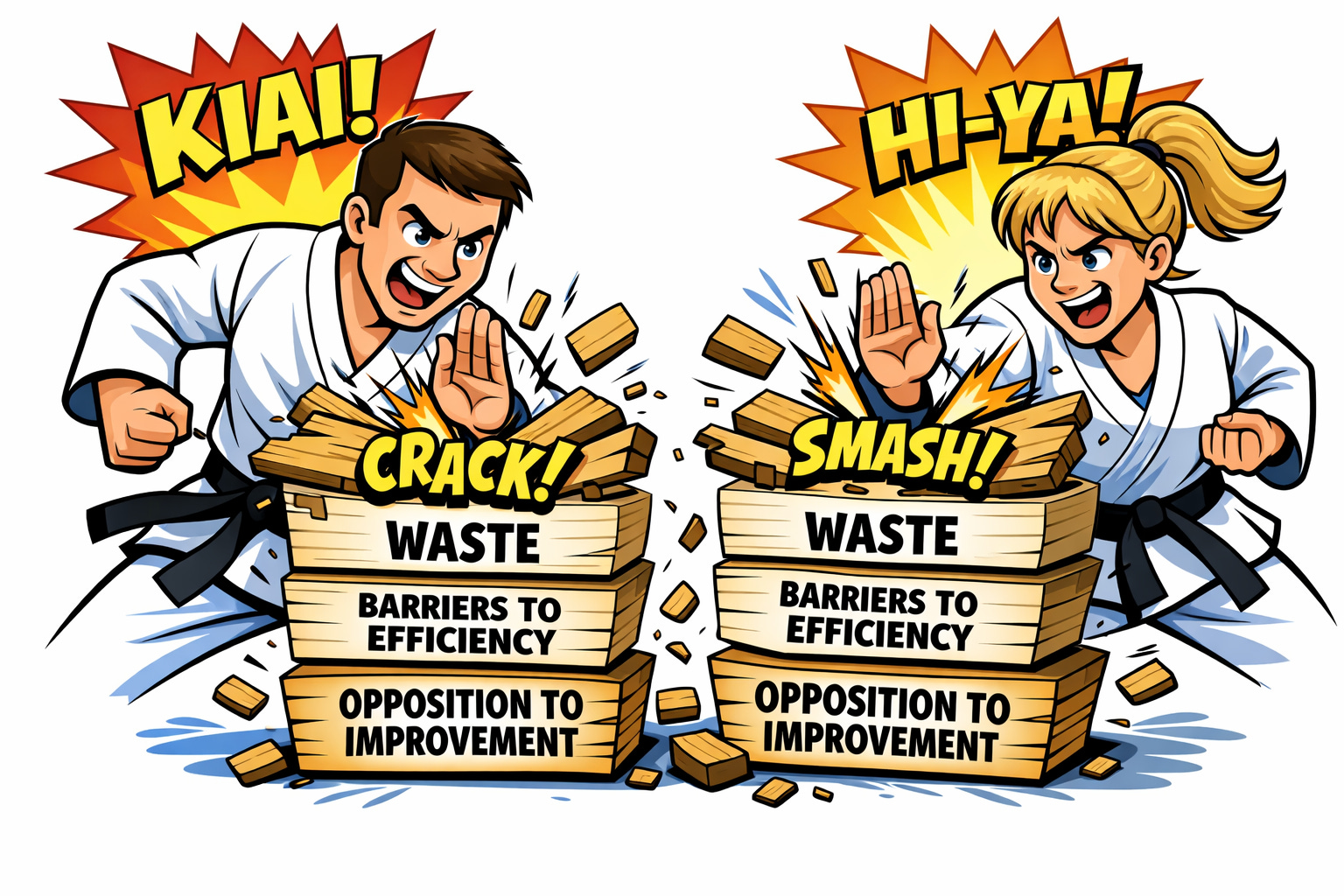
I’m sure in a lot of administrative structures, a Six Sigma black belt is useful to make things better. It’s just that at a university you see too many examples where they say they are reducing inefficiency but end up creating new inefficiencies that they ignore. And the new inefficiencies are never to the staff’s benefit. For example, a university might reduce inefficiency and waste by saying that they will no longer supply computer program X because only 200 people at the university use it. But those 200 people really need it, so they need to organize buying it on their own. The efficiency at the institution level is just shifting work and cost to another unit. Similarly, the charge to consolidate department admin structures rarely reduces people and usually creates more problems in trying to standardize everyone and make them fit into the cookie-cutter mold
And then there’s the Department of Government Efficiency. A lie wrapped in an acronym disguising a deliberate effort to destroy NIH. My fellow Substacker Elizabeth Ginexi did a nice job of summarizing the multi-pronged and ongoing attack against NIH in her latest post.
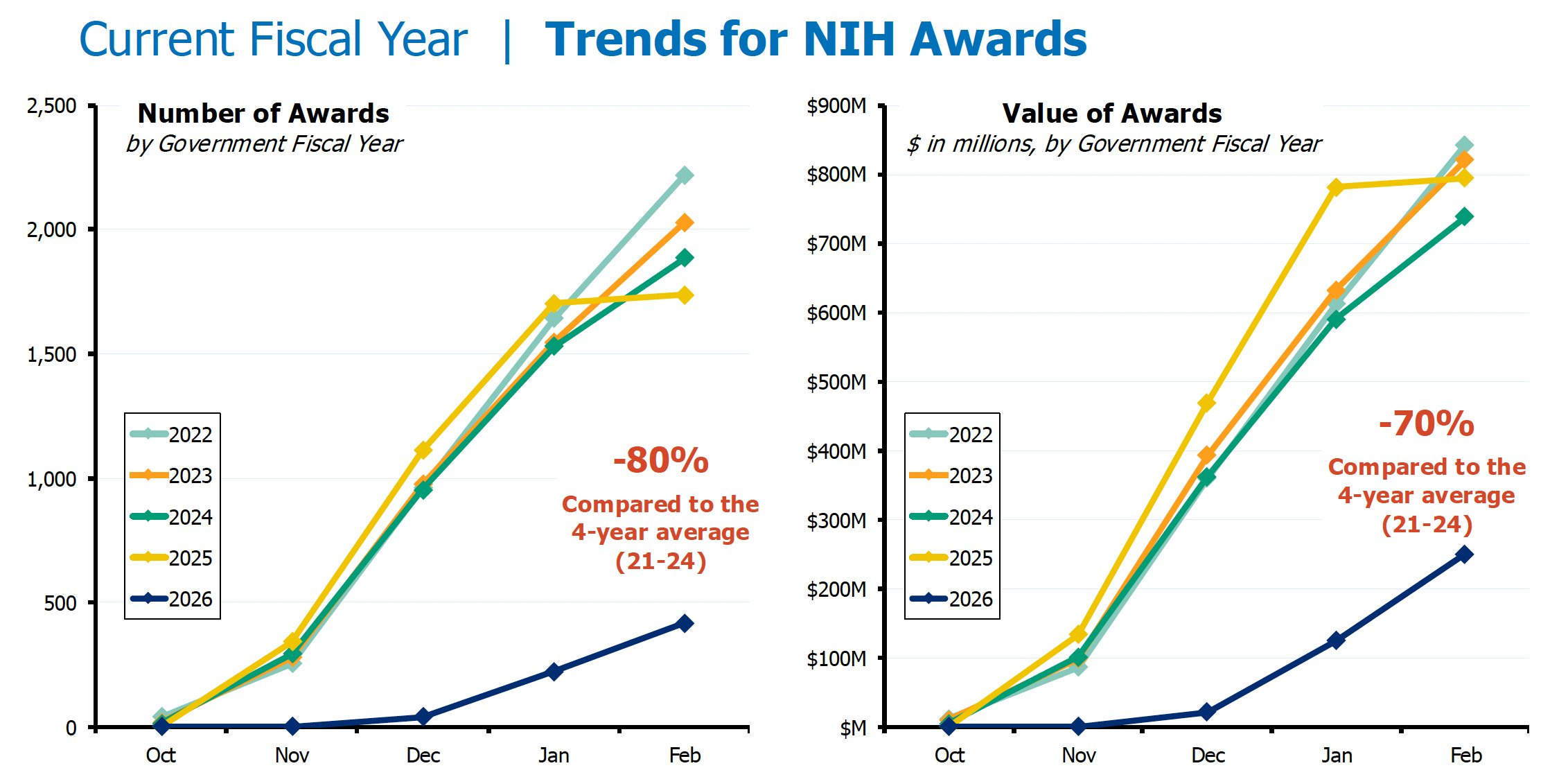
In case you missed it, an article in last week’s Nature showed how disbursements of awards is trickling compared to previous years. In the graphs below showing the first five months of the fiscal year. You can see fiscal years ’22, ’23, and ’24, when we used to have a functioning government, look very similar. FY25 started out similarly, but then abruptly halted at the end of January when you know what happened. But FY26? That’s a pretty big decrease. It seems like there’s some new inefficiencies that need to be chopped out. Unless….do you think this is maybe intentional?
Stay safe out there and in the event they activate the draft, I know a guy in Canada.